
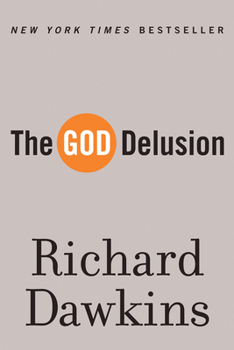
The God Delusion
by Richard Dawkins
I was only casually an atheist before reading this, because after saying there is no god, there’s not much more to be said on the topic. Or is there? So I bought this hardcover at a garage sale twenty years ago, and it’s a non-fiction book with a lot to say about there being no god.
The book just goes on and on and on about it, a thousand proofs that there’s no god, until the very idea of God completely disintegrates in the face of logic.
It’s well-written, smart so it can’t be boring, but not so smart as to ever leave me baffled. Anyone who gives the book a fair chance, doesn’t come at it intending to argue for Father, Son, and Holy Ghost, is going to be a disbeliever by the end.
I’ve re-read The God Delusion several times over the years, but not recently, as the author has become one of those kooks who enjoys belittling trans people. Even smart people can be dumbshits.
Verdict: BIG YES, despite the author.
♦ ♦ ♦

Revolutionary Road
by Richard Yates
Frank Wheeler hates American-style conformity, where everyone gets married, pumps out a couple of kiddies, gets a house in the suburbs, and works at a job that they hate. He’s married to April, who shares most of his disdain for normalcy, but the heck of it all is, they’re living pretty much the lives they despise.
Frank works in an office, and hates it. April stays in their suburban house, and tends to their children — kids she didn’t particularly want in the first place, but Frank basically forbade her from having an abortion.
Theirs is not a happy marriage, and April’s the one who starts figuring out why. See, Frank has a certain glib manner in social situations, presenting himself as a thinker, a man going places. That presentation is actually his only talent, and it’s earned him ‘success’. It even earned him his wife — April thought she was marrying a thinker, a man going places, but slowly figures out that she’s married a man who works in an office, and hates it.
This is a wow book, adult in ways fiction usually isn’t — these people don’t seem fictional. Can’t remember a novel that better captures the human misery of constantly saying the wrong thing, and never quite knowing it. Frank and April are both unsure of themselves, know they’re probably making the wrong decisions, but make the wrong decisions anyway.
For me, life has always been the choice the book presents: Do what everyone else does, and like what everyone else likes, and have friends who do what everyone else does and like what everyone else likes; or choose for yourself what to do and what to like, aware that dang few will agree, so you might end up with no or next-to-no friends at all. I’ve chosen the latter, and I’ll stick with it until the end.
Verdict: BIG YES.
♦ ♦ ♦
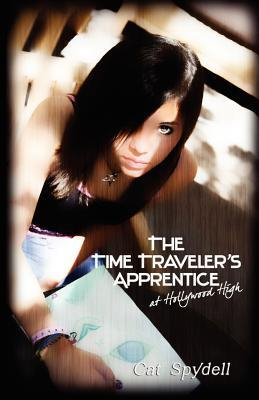
The Time Traveler’s Apprentice at Hollywood High
by Cat Spydell
Time travel is my favorite subset of science fiction, and I’ll read almost any novel about time travel. This one’s a ‘young adult’ title, but I’ve run out of time travel novels for grown-ups, and I loved Rebecca Stead’s When You Reach Me, which aimed even younger than this book’s high school target.
Jessie is a troubled kid, 15 or 16, who attempted suicide before the story starts. In the aftermath of that, she’s now ‘the suicide girl’ at her school, with all the whispers and insults and drama that brings, and at home her mother isn’t sure what to say or do, so everything in this girl’s life is a mess. There’s a boy involved, but it’s iffy most of the way whether he really gives a damn or whether he’s only trying to get into Jessie’s pants.
She’s sorta teeter-tottering between making it or not making it, and along comes a sci-fi element to make things more complicated. I won’t say anything more about that, except that it wasn’t the sci-fi element I expected & didn’t play out the way I expected, and being unexpected is one of the things I liked best about the book.
I’ve had nothing to do with kids since I was one, but I’ve always hated books, shows, and people that talk down to kids. This doesn’t — there’s no preaching. It’s a very well-written and eventually satisfying story where the main character is a kid, and anyone who’s ever been a kid can identify with it. Bonus: No boring bits, and there’s a hopeful ending.
Verdict: YES.
♦ ♦ ♦
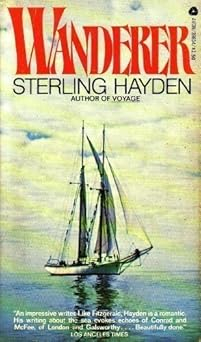
Wanderer
by Sterling Hayden
Movie star Sterling Hayden’s autobiography reveals him as a man akin to his most memorable movie characters — an iconoclast, living his life his way, everybody else be damned, my own counsel will I keep, etc.
At 15 he ran away and worked for some years as a sailor; in World War II he was a Marine, and won the Silver Star and Bronze Star, then worked as a spy for the pre-CIA. When he turned to acting, he discovered he wasn’t wild about Hollywood, and when his wife divorced him he stole their four children and skipped out on court dates to sail the high seas.
For the most part, he comes off as a likable scoundrel who could write, and he writes with the same brash confidence as his most memorable screen characters. He’s cynical about everything except sailing and life, and as a lifelong runaway myself, he seems like a guy I’d like having breakfast with.
First thing I’d tell him, though, is something he doesn’t seem to have noticed: Running away is different and kinda scummy when you’re running out on a marriage and kidnapping the kids.
Verdict: YES.
♦ ♦ ♦

When the Cat’s Away
by Kinky Friedman
Singer-songwriter Kinky Friedman was also a detective novelist, but being Kinky his writing is funny. It’s a gumshoe story, starring Kinky himself, investigating the mystery of a cat that’s disappeared from a cat show at New York’s Madison Square Garden.
This leads to bigger mysteries, and most chapters could stand alone as short stories, which makes this good for reading past my bedtime. Adds up to a solid modern-day spin on Sam Spade, but with kinks.
You could argue that it’s racist, for the casual use of words like slope, kike, and faggot, but they’re descriptive, not mean-spirited, and like the rest of the book, often funny. Funny was the intent, and the author succeeds most of the time, but sometimes it’s too much, like a wanna-be Jimmy Kimmel trying to make every line into a punchline.
Overall, though, the book is fun, engrossing, a worthwhile read. Sometimes found myself wishing I wrote with Friedman’s snap.
Verdict: YES.
1/27/2025


Leave a Reply