
Before getting fat and gray, I was always reading a book or three, but then came the internet, elbowing most literature off my shelf. For many years now, I’ve mostly re-read the same few, favorite books over and over, some of which I’ve reviewed already and the rest, I will. Now that I’m retired, there’s more time for books, so I’m reading more and might as well start reviewing them.
This first batch of five are books that I read in the past few years, but not recently, so the reviews are written from memories, nudged along by the library’s helpful list of the books I’ve checked out.

A Coney Island of the Mind
by Lawrence Ferlinghetti
I am a prose reader, accustomed to sentences that add up to paragraphs, which add up to stories. Poetry is more difficult for me, and the effort usually exceeds the payoff. I’ll always be a prose reader, and less interested in poetry. Actually, ‘less interested’ isn’t strong enough. More like, repulsed.
This is poet and publisher Lawrence Ferlinghetti’s most famous collection, and it’s the best book of poetry I’ve read, but I’ve only read maybe half a dozen, and I’m not really on the lookout for more.
Coney has three sections. The first consists of Ferlinghetti’s wildly furious tirades about the emptiness and stupidity of American culture. The second section is a bunch of poems meant to be accompanied by jazz music, which, since the book includes no jazz music, is less than ideal (but still pretty good). The last section is a lot of poems about death, which I sadly appreciated more than I might have twenty or thirty years ago.
Mostly, it’s the first section that does the ass-kicking here. It’s great to feel someone else’s rage in someone else’s words, but less great to look out the window and realize things have gotten worse since Ferlinghetti’s work and death.
This collection, and specifically the title piece, works for me because it’s less airy and abstract than most of the poetry I’ve been forced to read, more telling about a setting and feeling than the amorphous word sprinkles of most poetry. More prosey than most poetry, I guess, and hope LF would take that as a compliment.
Read most of it.
Verdict: BIG YES.
♦ ♦ ♦

Kubrick
by Michael Herr
This was on my reading list for a long time, but I put it off because (a) while filmmaker Stanley Kubrick was one of the all-time greats, I generally don’t like biographies, and (b) this one’s touted as the best Kubrick bio, so I assumed it would be looong. Guess what, though? It’s short, less than 100 pages, which vary from interesting to fascinating.
Herr clearly loved Kubrick, knew him as well as almost anyone could, from a long personal and professional relationship. But the book’s not a statue carved from marble for the guy. There be warts here, sometimes hilarious eccentricities. Dude was obsessive, wanted every aspect of every movie he made to be perfect. He succeeded quite often. So does Herr.
The final third of the book is about Kubrick’s last film, Eyes Wide Shut, a movie I’d been lukewarm on when I’d first seen it. Reading the book convinced me to re-watch the movie, and I liked it lots more on that second viewing.
My reading of this book and re-watching of the movie were both a couple of years ago, and I dunno why I never wrote a review of the movie, so now I get to re-re-watch it!
Read all of it.
Verdict: YES.
♦ ♦ ♦

Native Seattle
by Coll-Peter Thrush
I grew up in Seattle, moved away but eventually came back, plan to die here but hopefully not soon, and I’m spending my retirement getting to know as many of the city’s parks, neighborhoods, restaurants, bus routes, and quirks as I can squeeze into my life. Fair to say that I love Seattle.
So does Thrush, writing this history of the city’s earliest days, and even pre-history. It’s focused on local indigenous communities, with a lot of info nuggets previously unknown to me.
The author has done the research and has the knowledge, so there’s lots to be learned here, but the book is not an easy or enjoyable read. It’s written like a textbook, dry and academic, and often feels like a lecture put on paper.
Read about half of it.
Verdict: MAYBE.
♦ ♦ ♦

The Sanatorium
by Sarah Pearse
There’s this fancy Swiss resort that had formerly been a sanatorium, and here’s Elin Warner, staying there with her boyfriend. She’s a police detective, which I wish she wasn’t because I hate cops, but it’s a detective novel so there’s no getting around it.
Anyway, Elin has ‘issues’ from having been injured in the line of duty, which is why she’s on vacation. The resort’s architect has gone missing, and when the detective’s brother’s fiancée goes missing too, Elin volunteers her sleuthing expertise. Everyone’s a suspect, and after a while there’s an avalanche.
The book was a big success, says the jacket, but it never gelled for me.
Didn’t finish it.
Verdict: MAYBE.
♦ ♦ ♦
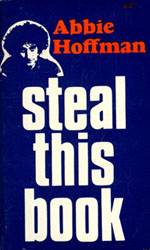
Steal This Book
by Abbie Hoffman
This is a classic. Written by one of the 1960s’ great rabblerousers, it’s non-fiction about how to get free food, free housing, free medical care, free transportation, and sure, why not, how to run a guerrilla movement. Stick it to the man, baby!
The advice is, of course, 99% outdated, hacks that would flamboyantly fail today, and might well have failed even when first written. But the attitude remains invigorating, and necessary.
Read about half of it.
Verdict: YES.
12/28/2024
itsdougholland.com
← PREVIOUS NEXT →


Leave a Reply